

How To Repair Scratch In Uv-stabilized Fortiflex High Density Polyethelene
Acrylic – also known as Plexiglass, Perspex, and Lucite – is an exceptionally pop type of plastic since it has many useful advantages. For example, clear acrylic sheets accept infrequent optical clarity, while colored acrylic sheets are available in a spectrum of colors.
Unfortunately, when compared to stronger plastics similar polycarbonate, it scratches fairly easily. This creates not merely a visually unappealing appearance, merely it damages the acrylic's durability. Thankfully, it's often much easier to repair acrylic than it is to create the scratches in the commencement place.
Removing surface scratches from acrylic just requires a few elementary tools and a bit of decision. In this guide, we will walk through how to evaluate scratches, and provide 2 methods for repairing light and moderate scratches in acrylic.
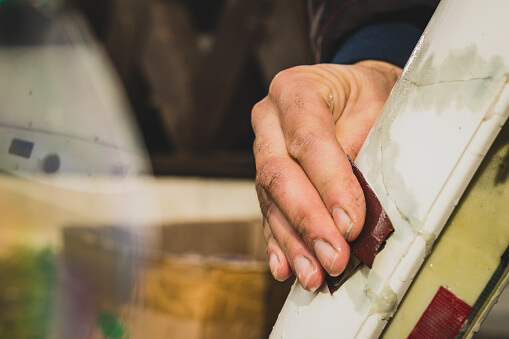
Evaluate the Scratched Acrylic
Before you brainstorm repairing scratches in acrylic, it's important to make sure that the acrylic is really scratched. Then, we volition make up one's mind the depth of the scratch – this will help u.s. identify the all-time removal technique.
Deep cracks cannot easily be fixed. If croaky acrylic must exist fixed, in that location are a few ways to gum acrylic together. However, this won't necessarily join the acrylic cleanly, and some gum balance may be visible. If this isn't suitable for your acrylic'south use case, there's not very much to be done – we would recommend purchasing a new acrylic sheet, or purchasing a stronger plastic similar polycarbonate.
Next, brand certain you're not actually looking at "crazing." Did these scratches mysteriously appear shortly after cleaning the acrylic with chemic-based cleaners? If so, this is likely an unfortunate result of chemical damage – non scratching. Crazing requires a lot of aggressive sanding and polishing to fix, and often never looks good as new. It's generally advised that you lot purchase a new sheet if the crazing is significant.
If your acrylic is truly scratched, evaluate how deep the scratches are. Lightly run your fingernail over the scratched portion of acrylic. If the scratch caught your fingernail, then information technology's a deep scratch. If the scratch is deep, try to estimate how deep it is. Whatsoever scratches deeper than v mm are exceptionally heavy scratches – these are generally regarded as irreparable, and can merely occasionally be repaired past specialty buffing tools.
Removing Mild Plexiglass Scratches
Information technology's very easy to repair acrylic that has low-cal surface scratches, which generally result from regular vesture-and-tear. To brainstorm, get a few basic items ready:
- Acrylic cleaner (we recommend Novus No. 1)
- Acrylic polish (we recommend Novus No. 2)
- Sandpaper (800 and 1200 grit)
- H2o for the sandpaper
- Clean soft cotton or microfiber cloth
First, we volition clean the acrylic. If at that place are small amounts of dirt on the acrylic, the acrylic volition likely get more scratched during the repair procedure. For all-time results, we recommend spraying a special acrylic cleaner similar Novus No. 1 on the acrylic. However, warm water and mild dish detergent will also practise an adequate job. And so, apply the cotton or microfiber material to gently wipe down the area. Rinse the acrylic with warm water, utilize a dry microfiber or cotton cloth to remove excess water.
Take a practiced wait at these mild scratches. If the scratches are only visible upon shut inspection, sandpaper may non be necessary. Instead, use an abrasive acrylic smoothen (we recommend Novus No. ii) direct on the scratched area, and utilise consistent, moderate pressure to a clean, soft rag. Move information technology in a circular motion until yous can't see the scratches – this could take a few minutes. When you believe the acrylic is smooth, gently wipe off the compound with a clean cotton fiber or microfiber towel.
If some scratches are still visible, get the sandpaper, water, acrylic smooth, and a fresh, clean cotton fiber or microfiber cloth. Then, follow these steps:
At this point, your acrylic should look shiny and as adept equally new. If y'all can still see a fissure – the scratch was probable deeper than a light scratch.
Removing Moderate Plexiglass Scratches
- The procedure to repair deeper scratches is similar to the procedure to repair low-cal scratches, except we're adding two more than items – 600 grit sandpaper and Novus No. 3. Collect the following items:
- Acrylic Shine (we recommend all three Novus products)
- Clean, soft cotton wool or microfiber cloth
- Sandpaper (600, 800 and 1200 dust)
- H2o for the sandpaper
Make sure that the acrylic sheet is cleaned either with dish soap or Novus No. ane. And then, follow this procedure to remove moderately deep (under v mm) scratches from acrylic:
- Wet a slice of 600 grit sandpaper, and rub it onto the scratched portion in a circular motion.
- Apply a piece of dry 600 grit sandpaper, and rub it onto the aforementioned portion in a circular motion
- Alternate between the in a higher place 2 steps for most four minutes. Your acrylic will look crude – this is fine.
- Moisture a piece of 800 dust sandpaper, and rub it onto the scratched portion in a circular motion.
- Utilize a piece of dry out 800 grit sandpaper, and rub it onto the aforementioned portion in a circular motion
- Alternate between the above two steps for near three minutes.
- Wet a slice of 1200 grit sandpaper, and lightly rub it into the scratched portion in a circular move.
- Utilize a piece of dry 1200 grit sandpaper, and get over the above potion again in a circular movement.
- Alternating between the in a higher place ii steps until you believe there are no more scratches.
- Take a dry, make clean cotton wool or microfiber cloth. Wipe away whatsoever fragments Warning: A dingy cloth could scratch the acrylic all over again!
- Spray Novus No. 3 to the sanded area. Gently use a clean textile to smoothen with a firm, dorsum and forth motion.
- Remove all remaining Novus No. iii with a clean textile.
- Apply Novus No. two to the area. Gently use a clean cloth in a firm, back and forth motion.
- Use a cloth to wipe away any remaining cleaner.
Subsequently following this procedure, your acrylic should appear scratch-complimentary. Smoothen the plastic using Novus No. 1 for best results.
Concluding Thoughts
Whether acrylic plastic is beingness used for domicile employ or commercial use, it'southward an unfortunate reality that it may accidentally become scratched. Thankfully, acrylic'due south concrete properties allow information technology to easily exist buffed with special, slightly annoying solutions. If a scratch is less than five mm deep, it'due south simple to fix acrylic with a few unproblematic tools and a trivial elbow grease.
If your acrylic has sustained an uncommonly deep scratch, has been cracked, or undergone intense crazing, it may be time for a new piece of acrylic. To find the all-time possible replacement piece, visit our acrylic plastic page, or view our selection of cut-to-size acrylic. If yous have any further questions about acrylic, contact us today.

Source: https://www.acmeplastics.com/content/how-to-remove-scratches-from-plexiglass/
Posted by: garridodraire1986.blogspot.com
0 Response to "How To Repair Scratch In Uv-stabilized Fortiflex High Density Polyethelene"
Post a Comment